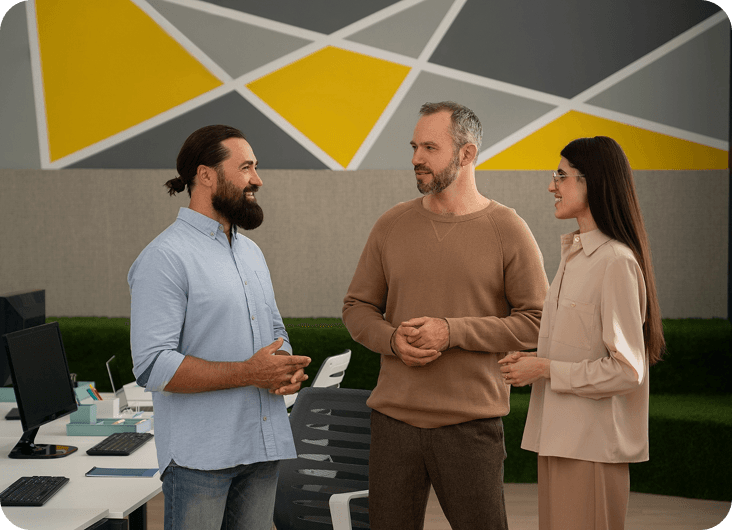
Proximity matters. Serendipitous moments near whiteboards often unblock weeks of async back‑and‑forth. The magic happens when people who need to collaborate can easily see each other and have spontaneous interactions. Research from organizational psychology shows that teams with higher "collision frequency"—unplanned interactions between team members—solve problems faster and build stronger relationships. Design your space to make these collisions likely without making them mandatory.
The distance between team members directly impacts collaboration quality. Teams sitting within 10 meters of each other collaborate more frequently than those further apart. Beyond 30 meters, collaboration drops dramatically. This isn't just about convenience—it's about the cognitive cost of initiating interaction. When collaboration is easy, it happens naturally. When it requires scheduling and travel, it becomes a formal process that people avoid.
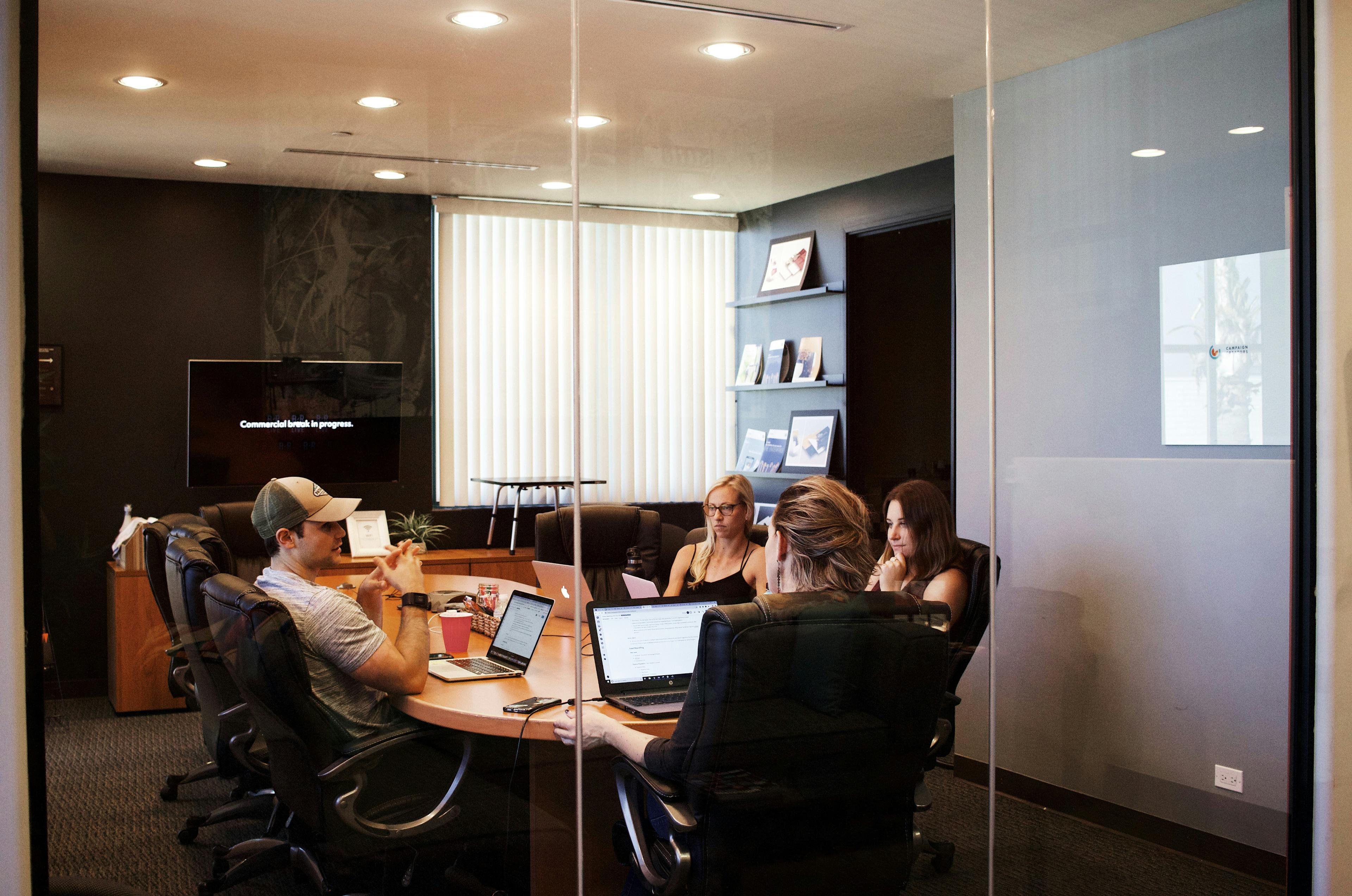
Design for visibility without surveillance—open sightlines and plenty of small rooms for sensitive discussions. People need to see their teammates to know when they're available for quick questions, but they also need privacy for confidential conversations. The best layouts create visual connection in common areas while providing easily accessible private spaces for sensitive work. This balance prevents the feeling of being watched while enabling natural collaboration.
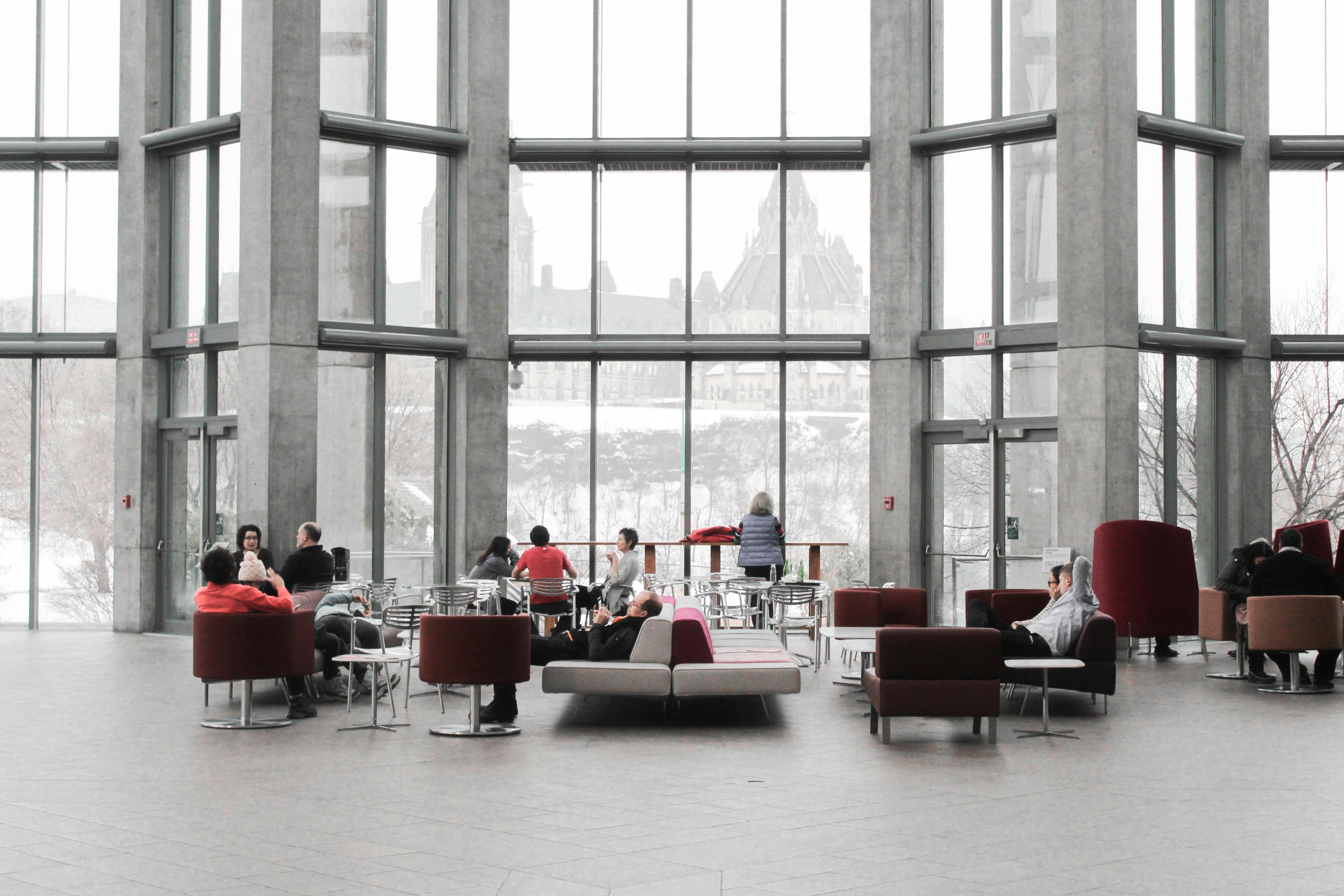
Create zones that encourage different types of interaction. High-energy collaboration zones near coffee stations and whiteboards invite spontaneous problem-solving. Quiet focus zones allow deep work without interruption. Social spaces like lounges facilitate relationship-building. Phone booths enable private conversations. Each zone serves a specific social function, and the movement between zones creates natural opportunities for connection.
Hospitality touches—good coffee, natural light, and comfortable lounges—make people want to gather. These aren't perks; they're tools for building trust and connection. When people enjoy being in the space, they stay longer, interact more, and build stronger relationships. The investment in hospitality pays dividends in team cohesion and culture. Think of your workspace as a host would think of their home: how can you make people feel welcome, comfortable, and valued?
Rituals and space must work together: weekly demos, office hours, and maker time. The physical space should support your team's cultural rituals. If you have weekly all-hands, design a space that makes those meetings feel special and productive. If you have office hours, create a space where people feel comfortable dropping by. If you have maker time for focused individual work, ensure quiet zones are respected. When space and rituals align, both become more powerful.
Design for flexibility and adaptation. Teams evolve, and their collaboration needs change. Spaces that can be reconfigured easily—with movable furniture, modular walls, and flexible technology—allow teams to adapt their environment as their work patterns develop. This flexibility prevents the space from becoming a constraint as teams grow and change.
Create multiple scales of collaboration. Not every interaction needs a formal meeting room. Sometimes a quick conversation at a desk is enough. Other times, you need a small huddle room. Occasionally, you need a large presentation space. Design for the full spectrum of collaboration scales, making it easy to match the space to the interaction type.
High trust reduces meetings and increases initiative. The right space is an amplifier. When teams trust each other and can easily communicate, they spend less time in formal meetings and more time making progress. They can make decisions quickly because they have the context from regular informal interactions. They can take initiative because they understand team priorities and constraints. The workspace that enables this trust becomes a competitive advantage.
Measure what matters: interaction frequency, meeting duration, and spontaneous collaboration events. Use data to understand how your space is actually being used. Are teams collaborating as you hoped? Are there friction points that prevent natural interaction? Are people using the spaces you designed, or are they finding workarounds? This data guides iterative improvements to your space design.